


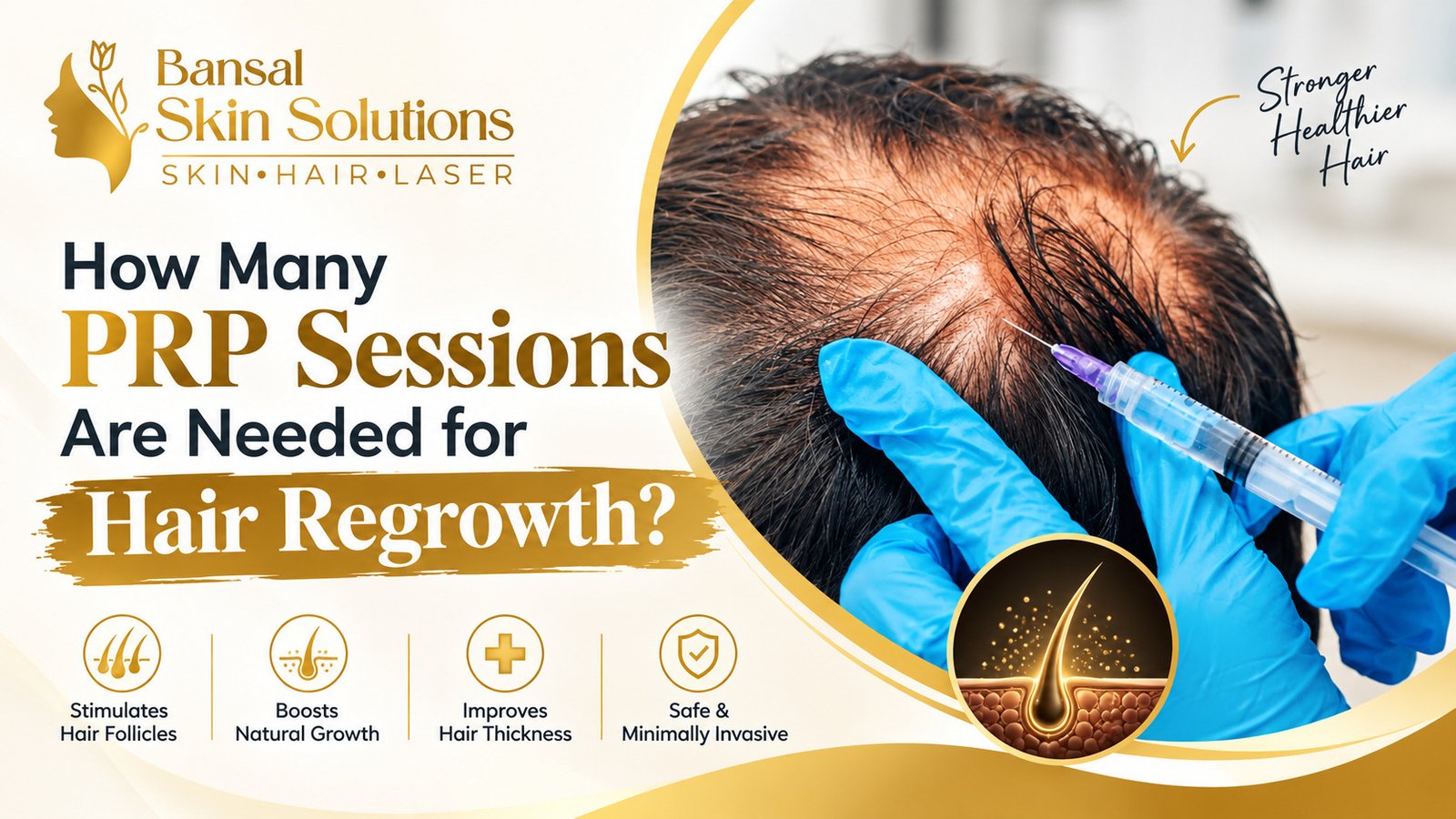
Hair thinning, excessive hair fall, and reduced hair density can affect both your appearance and confidence. If you are exploring non-surgical options to improve hair growth, Platelet-Rich Plasma (PRP) therapy may be worth discussing with a qualified dermatologist. One of the most common questions patients ask is: How many PRP sessions are needed for hair regrowth?
Generally, an initial course of 3–4 PRP sessions, spaced approximately 4–6 weeks apart, is commonly used for hair loss. However, the exact number of sessions depends on the cause of hair loss, its severity, your scalp condition, and your response to treatment. Some patients may need additional sessions or periodic maintenance treatments to help sustain improvements.
Understanding the treatment process, expected results, and maintenance requirements can help you make an informed decision. If you are considering PRP Hair Loss Treatment in Jaipur, consulting an experienced dermatologist can help determine whether this treatment is appropriate for your hair concerns.
What Is PRP Hair Treatment and How Does It Work?
Platelet-Rich Plasma (PRP) therapy is a medical procedure that uses a concentrated portion of your own blood containing platelets. These platelets release growth factors that participate in tissue repair and cellular signalling.
During PRP therapy for hair loss, a healthcare professional collects a small blood sample and processes it in a centrifuge to separate the platelet-rich portion. The prepared plasma is then injected into selected areas of the scalp.
The aim is to support the hair follicles and potentially improve hair density and thickness, particularly in people experiencing certain types of hair thinning, such as androgenetic alopecia.
PRP is not a guaranteed cure for hair loss, and results vary between individuals. Its effectiveness also depends on the underlying cause of hair shedding and whether the affected follicles remain capable of producing hair.
How Many PRP Sessions Are Needed for Hair Regrowth?
Most treatment plans begin with approximately three to four sessions during the initial treatment phase. These sessions are usually scheduled several weeks apart to allow the dermatologist to assess progress and plan subsequent treatment.
However, there is no single session count that works for everyone.
The number of sessions may depend on several factors:
- Severity of hair loss: People with early-stage hair thinning may respond differently from those with more advanced hair loss.
- Cause of hair loss: PRP may be more appropriate for certain types of hair loss than others.
- Hair follicle condition: The presence of viable hair follicles can influence the potential for improvement.
- Individual response: Some people experience noticeable changes, while others see limited improvement.
- Overall treatment plan: Your dermatologist may recommend additional sessions or combine PRP with other evidence-based treatments.
A dermatologist may reassess your scalp after the initial course to determine whether further treatment is appropriate.
How Many PRP Sessions Are Needed in Different Situations?
The number of PRP sessions required for hair regrowth depends on the type and severity of hair loss. For early-stage hair thinning, an initial course of 3–4 sessions may be considered. Patients with androgenetic alopecia may require multiple sessions, followed by regular assessment and maintenance treatments if beneficial. For persistent hair fall, identifying the underlying cause is essential before starting PRP therapy. PRP may also help improve hair density when the follicles remain suitable for treatment. However, advanced baldness may respond less effectively, particularly when hair follicles are no longer functional. A dermatologist will recommend a personalized treatment schedule after examining the scalp and reviewing the patient's medical history.
What Is the PRP Hair Treatment Results Timeline?
One of the most important things to understand before starting PRP hair regrowth treatment is that results take time. Hair grows in cycles, so improvements do not usually appear immediately after an injection.
Here is a general overview of the PRP hair treatment results timeline.
First 1–2 Weeks: Initial Recovery
You may experience mild scalp tenderness, redness, swelling, or sensitivity around the injection sites. These effects are generally temporary.
Do not expect visible hair regrowth during this early stage. Follow your dermatologist's instructions regarding scalp washing, exercise, and hair products.
Weeks 3–6: Early Treatment Phase
During this period, you may still be completing your initial PRP sessions. Some patients notice changes in hair shedding, but this is not guaranteed, and reduced shedding alone does not confirm successful treatment.
Your dermatologist may monitor your scalp condition and adjust the treatment plan if necessary.
Months 2–3: Early Signs of Improvement
Some patients begin noticing changes in hair thickness, shedding, or density during the first few months. Others may need more time before any improvement becomes apparent.
Standardised scalp photographs can help you and your dermatologist compare changes more objectively.
Months 3–6: Assessing Hair Regrowth
This period is often more useful for assessing the potential benefits of treatment. Improvements in hair density or thickness may become more noticeable in people who respond well.
However, individual results vary, and PRP cannot guarantee substantial regrowth.
Important: The timeline above is an estimate, not a promise. The underlying diagnosis, treatment protocol, and individual response all influence the outcome.
What Is the Time Between PRP Hair Treatment Sessions?
The time between PRP hair treatment sessions is usually around four to six weeks during the initial treatment phase. This interval allows the dermatologist to administer the treatment in stages and monitor your response.
Once the initial course is complete, follow-up appointments may be scheduled to assess progress.
Some patients may benefit from maintenance sessions every few months, while others may require a different schedule or may not need further PRP treatment. The appropriate interval depends on clinical response and the dermatologist's assessment.
Avoid scheduling additional sessions more frequently than recommended. More injections do not automatically mean faster or better hair growth.
What Factors Affect PRP Hair Treatment Before and After Results?
PRP hair treatment before and after results can vary considerably. Understanding the factors that influence these outcomes helps establish realistic expectations.
1. Cause of Hair Loss
PRP may help some people with androgenetic alopecia, also known as pattern hair loss. However, hair shedding caused by nutritional deficiencies, thyroid disorders, certain medications, scalp conditions, or temporary physiological stress may require different treatments.
Identifying the cause is an essential first step.
2. Stage of Hair Thinning
People with early hair thinning and functioning follicles may have a better opportunity for improvement than those with extensive, longstanding baldness. PRP cannot reliably restore hair in areas where follicles are no longer functional.
3. Consistency of Treatment
Following the prescribed treatment schedule allows your dermatologist to assess progress appropriately. Skipping appointments or changing the schedule without medical advice may complicate the assessment of results.
4. Overall Scalp and Hair Health
Underlying scalp inflammation, medical conditions, nutritional issues, and other factors can influence hair growth. Addressing these concerns may be an important part of the treatment plan.
5. Individual Response to PRP
Platelet concentration, preparation methods, injection techniques, and individual biological differences may influence treatment outcomes. This is one reason why results cannot be guaranteed.
Can PRP Treatment Help With Hair Thinning and Hair Fall?
PRP treatment for hair thinning may help improve hair density and thickness in selected patients, particularly those with pattern hair loss. The growth factors released by platelets may influence biological processes involved in hair follicle activity.
Similarly, PRP treatment for hair fall may be considered when a dermatologist identifies an appropriate indication.
However, not every type of hair loss responds equally well. For example, sudden or widespread hair shedding may be associated with stress, illness, hormonal changes, or nutritional deficiencies. These conditions require proper evaluation rather than automatically proceeding with PRP.
PRP is also not a replacement for every established hair loss treatment. Depending on the diagnosis, your dermatologist may discuss options such as topical minoxidil, prescription medications when appropriate, nutritional correction, or other therapies.
The most suitable approach is one that addresses the underlying cause rather than focusing only on visible hair fall.
Are PRP Hair Treatment Maintenance Sessions Necessary?
PRP hair treatment maintenance sessions may be recommended when the initial treatment produces a beneficial response. However, maintenance is not mandatory for every patient, and the ideal frequency has not been established universally.
Hair loss conditions such as androgenetic alopecia can continue progressing over time. Therefore, improvements following PRP may not be permanent without ongoing management of the underlying condition.
Your dermatologist may recommend periodic reviews to determine whether maintenance sessions are worthwhile. In some cases, combining PRP with other appropriate treatments may offer a more comprehensive approach to managing hair loss.
Before committing to repeated sessions, discuss the expected benefits, costs, limitations, and alternative treatment options.
Is PRP Hair Loss Treatment Safe?
PRP uses a component of your own blood, which reduces the risk of certain immune reactions associated with donor-derived products. Nevertheless, it is an injectable medical procedure and is not entirely risk-free.
Possible side effects include:
- Temporary pain or tenderness at injection sites.
- Redness or swelling of the scalp.
- Bruising or minor bleeding.
- Headache or scalp discomfort.
- Infection, although proper sterile technique helps reduce this risk.
Your dermatologist should review your medical history, medications, bleeding risks, and any relevant health conditions before treatment. People with certain blood disorders, platelet abnormalities, active scalp infections, or other medical concerns may require additional assessment or may not be suitable candidates.
Choose a qualified medical professional who follows appropriate infection-control procedures and uses a suitable PRP preparation protocol.
How to Choose the Right Dermatologist for PRP Hair Loss Treatment
Choosing an appropriate dermatologist is an important step when considering hair restoration treatment. Rather than relying solely on promotional claims or before-and-after photographs, look for a clinician who can explain the evidence, limitations, and expected outcomes.
Consider the following factors:
- Qualifications: Check that the practitioner has appropriate dermatology training and credentials.
- Accurate diagnosis: The consultation should include an assessment of your hair loss pattern, medical history, and potential contributing factors.
- Individualised treatment planning: The recommended number of PRP sessions should reflect your clinical needs rather than a standard package alone.
- Transparent expectations: The dermatologist should explain potential benefits, risks, costs, and alternative treatments.
- Follow-up care: Progress should be reviewed using clinical assessments and, where appropriate, standardised photographs.
If you are searching for the Best Dermatologist in Mahesh Nagar, Jaipur, prioritise professional qualifications, a thorough evaluation, and a treatment plan based on your individual condition.
Conclusion
So, how many PRP sessions are needed for hair regrowth? For many patients, an initial course of three to four sessions provides a starting point for treatment, with appointments commonly spaced four to six weeks apart. However, the ideal number of sessions, the time needed to see improvement, and the need for maintenance depend on individual circumstances.
PRP therapy for hair loss may help improve hair thickness and density in selected patients, but it is not a guaranteed solution for every form of hair loss. Accurate diagnosis, realistic expectations, and appropriate follow-up are essential for making an informed decision.
If you are considering PRP Hair Loss Treatment, consult a qualified dermatologist to understand the cause of your hair loss and determine whether PRP is a suitable option for you