


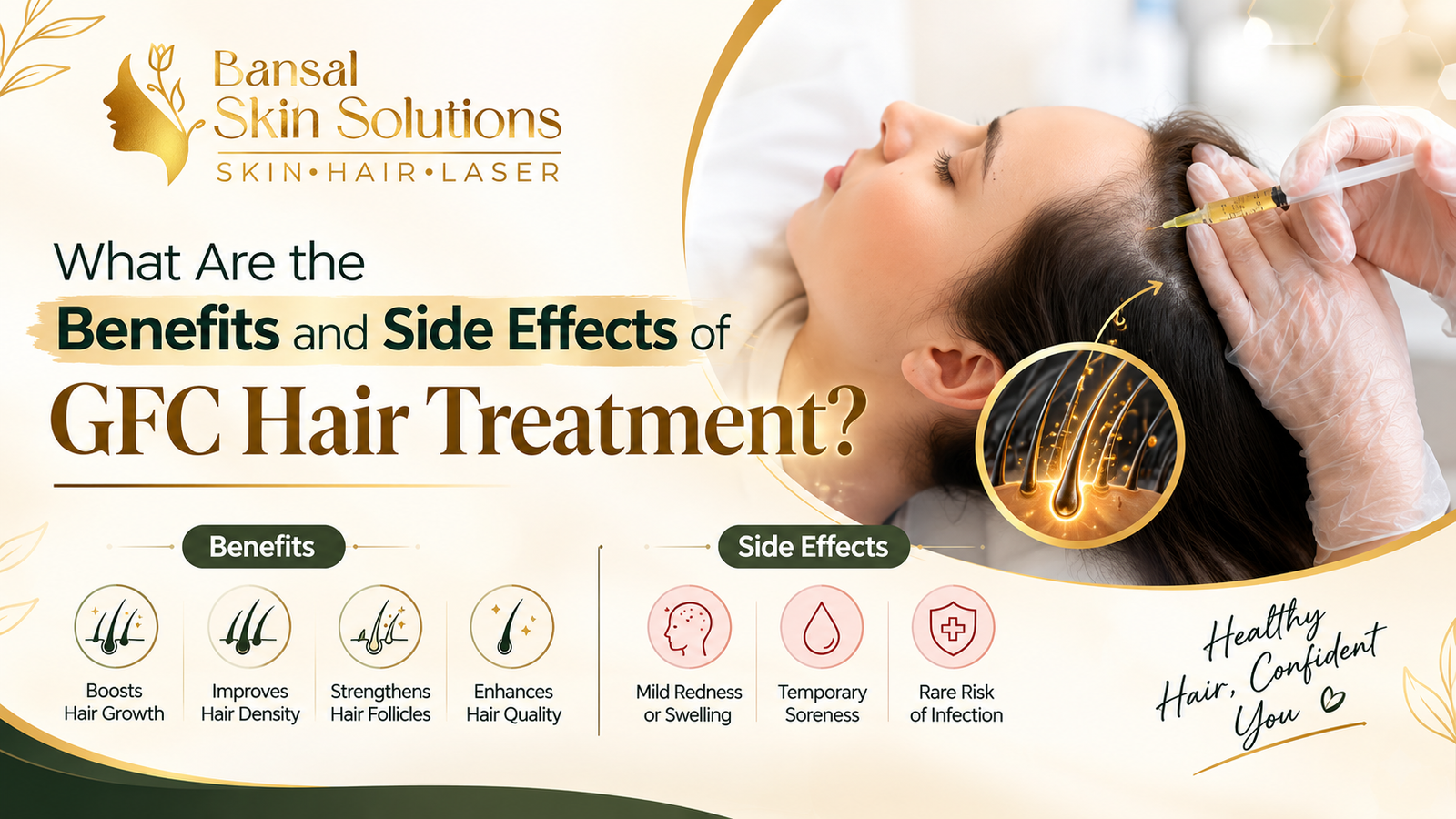
Hair fall can be frustrating, especially when your hair starts looking thinner, your scalp becomes more visible, or your confidence takes a hit. Although occasional hair shedding is normal, persistent hair loss may indicate an underlying condition that requires professional attention. Fortunately, modern dermatology offers several options to help manage hair thinning, including Growth Factor Concentrate (GFC) therapy.
GFC hair treatment is a non-surgical procedure that uses growth factor-rich components prepared from a patient's own blood to support hair follicle function and promote hair growth in suitable candidates. However, like any medical procedure, it has potential benefits, limitations, and side effects that patients should understand before starting treatment.
If you are considering GFC Hair Fall Treatment in Jaipur, learning how the procedure works, what results to expect, and how to manage possible side effects can help you make an informed decision with a qualified dermatologist.
What Is GFC Hair Treatment?
Growth Factor Concentrate (GFC) therapy is a regenerative treatment used in dermatology to help manage certain types of hair loss. The procedure involves collecting a small sample of the patient's blood and processing it to obtain a preparation rich in selected growth factors.
Growth factors are naturally occurring proteins involved in cellular communication, tissue repair, and biological processes that support hair follicle activity. In GFC hair treatment, these components are delivered into targeted areas of the scalp through small injections.
The goal is to support existing hair follicles, improve hair thickness, and encourage healthier hair growth where follicles remain capable of responding to treatment.
GFC Hair Fall Treatment is generally considered for people experiencing hair thinning or certain forms of pattern hair loss. However, its suitability depends on the underlying cause, the condition of the scalp, and the extent of hair loss.
How Does GFC Treatment for Hair Loss Work?
Hair growth follows a natural cycle consisting of three main phases: anagen (growth), catagen (transition), and telogen (resting). Conditions such as androgenetic alopecia, hormonal changes, nutritional deficiencies, and certain illnesses can disrupt this cycle and contribute to excessive hair shedding or progressive thinning.
GFC therapy aims to support the biological environment around existing hair follicles.
The process generally involves three steps:
1. Blood collection: A small blood sample is collected from the patient under appropriate clinical conditions.
2. Growth factor preparation: The sample is processed using a specialised system to prepare a growth factor-rich concentrate. Preparation methods vary between treatment systems.
3. Scalp administration: The prepared concentrate is injected into selected areas of the scalp by a trained medical professional.
The growth factors may help support cellular activity associated with hair follicle function. However, individual responses vary, and GFC treatment cannot guarantee hair regrowth or restore follicles that have been permanently destroyed.
What Are the Main Benefits of GFC Hair Treatment?
GFC Hair Treatment Benefits are an important consideration for anyone exploring non-surgical hair restoration. Although clinical evidence is still developing, the treatment may offer several potential advantages for appropriately selected patients.
1. May Help Reduce Hair Shedding
Persistent hair shedding can occur for several reasons, including pattern hair loss, physical stress, illness, and nutritional deficiencies. In selected patients, GFC therapy may help improve hair retention by supporting the function of existing follicles.
However, its effectiveness depends on the cause of hair loss. Treating an underlying medical condition may be necessary alongside or instead of GFC therapy.
2. May Support Hair Thickness and Density
Hair thinning can make the scalp more visible and reduce the overall volume of the hair. GFC therapy aims to support existing follicles and may help improve hair thickness or density in some patients.
Results are not immediate because hair follicles follow a natural growth cycle. Visible changes, when they occur, generally develop gradually over several months.
3. A Non-Surgical Hair Restoration Option
One potential advantage of GFC Hair Fall Treatment is that it does not require surgery, incisions, or the transplantation of hair follicles.
The treatment is administered through small injections into the scalp. This makes it an option worth discussing with a dermatologist for people who want to explore non-surgical approaches to selected types of hair loss.
Nevertheless, non-surgical does not mean risk-free. Temporary discomfort, swelling, and other injection-related effects can occur.
4. Uses Components Derived From the Patient's Own Blood
GFC therapy typically uses a preparation derived from the patient's own blood. This reduces concerns associated with introducing donor-derived biological material.
However, using autologous blood does not eliminate every risk. Injection-related complications, contamination from improper preparation, and individual reactions remain possible. Appropriate screening and sterile clinical procedures are essential.
5. May Complement a Personalised Hair Loss Plan
Hair loss treatment is rarely a one-size-fits-all process. Depending on the diagnosis, a dermatologist may recommend GFC therapy alongside established treatments or lifestyle changes.
For example, patients with pattern hair loss may benefit from evidence-based medical treatments, while people experiencing nutritional deficiencies may require correction of those deficiencies.
A dermatologist can determine whether GFC treatment is appropriate as a standalone procedure or as part of a broader hair management plan.
What Are the Side Effects of GFC Hair Treatment?
Understanding GFC Hair Treatment Side Effects is just as important as learning about its potential benefits. Although many patients tolerate the procedure, side effects can occur, particularly because the treatment involves scalp injections.
The likelihood and severity of adverse effects may vary depending on the injection technique, preparation method, individual health, and clinical conditions.
1. Temporary Pain or Discomfort
Patients may experience mild pain, stinging, or tenderness during and shortly after the injections. The degree of discomfort varies depending on individual sensitivity and the treatment area.
A qualified clinician can explain appropriate comfort measures before the procedure.
2. Redness and Swelling
Temporary redness, mild swelling, or sensitivity around the injection sites may develop after treatment. These effects are generally short-lived, but patients should follow their clinician's aftercare instructions.
Increasing redness, worsening swelling, or symptoms that persist longer than expected should be assessed by a medical professional.
3. Minor Bleeding or Bruising
Because GFC therapy involves injections, small amounts of bleeding or local bruising may occur. These effects are typically limited to the treatment area.
Patients should inform their clinician about bleeding disorders and any medications that may affect blood clotting. Do not stop prescribed medication without medical advice.
4. Headache or Scalp Tenderness
Some patients may experience a temporary headache, pressure, or tenderness following scalp injections. These symptoms may resolve with time, but persistent or severe discomfort should not be ignored.
5. Infection Risk
Although uncommon when appropriate sterile techniques are followed, infection is a potential complication of any injection-based procedure.
Increasing pain, warmth, spreading redness, pus, or fever requires prompt medical evaluation. Patients should seek urgent care if they develop severe symptoms or a rapidly worsening reaction.
6. Limited or No Visible Hair Regrowth
One important limitation of GFC Hair Treatment is that it does not work equally well for everyone. Some patients may notice improvements in hair thickness or shedding, while others may experience little or no visible change.
Results depend on the cause and severity of hair loss, the condition of the follicles, and individual response. Patients should discuss realistic expectations before committing to treatment sessions.
Who Is a Suitable Candidate for GFC Hair Fall Treatment?
GFC therapy may be considered for adults with selected types of hair thinning, particularly when hair follicles are still present and capable of responding to treatment.
Potential candidates may include people experiencing:
- Early-stage pattern hair loss.
- Gradual thinning in specific areas of the scalp.
- Reduced hair density associated with certain non-scarring hair loss conditions.
- Persistent hair thinning after a dermatologist has identified the underlying cause.
However, GFC treatment may not be suitable for everyone. People with active scalp infections, certain blood-related conditions, or other medical concerns may need additional evaluation before treatment.
Sudden, patchy, or rapidly progressing hair loss should be assessed before pursuing a cosmetic procedure. Conditions such as alopecia areata, thyroid disorders, iron deficiency, and scarring alopecia may require different treatments.
A dermatologist should examine the scalp, review the medical history, and determine the most appropriate approach.
How Many GFC Hair Treatment Sessions Are Needed?
The number of sessions depends on the patient's diagnosis, hair loss severity, response to treatment, and the protocol used by the treating clinic.
Some treatment plans involve an initial series of sessions followed by reassessment. Maintenance sessions may be discussed if the patient responds favourably, but there is no universally established schedule suitable for everyone.
It is also important to understand that GFC therapy does not necessarily address the underlying cause of progressive hair loss. Long-term management may require ongoing treatment or monitoring.
Before beginning GFC Hair Fall Treatment in Jaipur, ask your dermatologist about the recommended number of sessions, expected costs, potential risks, and how progress will be evaluated.
How Can You Reduce the Risk of Side Effects After GFC Treatment?
Following appropriate aftercare instructions can help reduce avoidable complications.
Consider these practical steps:
- Follow medical advice: Follow the specific scalp-care instructions provided by your treating clinician.
- Keep the scalp clean: Ask when it is appropriate to wash your hair after the procedure.
- Avoid unnecessary irritation: Follow your clinician's advice regarding strenuous exercise, excessive sweating, and irritating scalp products immediately after treatment.
- Do not scratch injection sites: Avoid rubbing or scratching the treated area while it is sensitive.
- Report unusual symptoms: Seek medical advice if you experience worsening pain, increasing redness, fever, or discharge.
- Attend follow-up appointments: Review your progress and discuss whether the treatment is providing meaningful benefits.
Avoid applying unapproved products or taking medications solely to manage post-treatment symptoms without professional guidance.
GFC Hair Treatment vs Other Hair Loss Treatments
GFC therapy is one of several options for managing hair loss, but the most suitable treatment depends on the underlying cause and severity of hair thinning. GFC therapy uses a growth factor-rich preparation derived from the patient's own blood to support existing hair follicles and potentially promote hair growth, although results vary. PRP therapy uses platelet-rich plasma to support hair follicle activity, with outcomes depending on the preparation method and treatment protocol. Minoxidil is an established medication used for certain types of hair loss, but it requires appropriate use and may cause side effects. Finasteride is a prescription medication used for selected cases of male pattern hair loss and requires medical guidance because it is not suitable for everyone. Hair transplantation is a surgical option that moves hair follicles from a donor area to areas affected by hair loss. It requires a surgical assessment to determine whether the patient has sufficient suitable donor hair. Consulting a qualified dermatologist can help you understand the benefits, risks, and suitability of each treatment option.
GFC therapy should not automatically be considered superior to PRP or established medical treatments. A dermatologist can explain the available evidence, benefits, limitations, and suitability of each option for your specific condition.
Where Can You Seek GFC Hair Fall Treatment ?
Choosing an appropriate clinic involves more than comparing treatment prices. A thorough diagnosis, qualified medical supervision, hygienic procedures, and realistic expectations are essential for responsible hair loss management.
If you are considering GFC Hair Fall Treatment in Jaipur, consult a qualified dermatologist who can evaluate your scalp, identify the likely cause of hair loss, and explain whether GFC therapy is appropriate for you.
When looking for the Best Dermatologist in Mahesh Nagar, consider the doctor's qualifications, experience in managing hair disorders, treatment approach, and willingness to discuss both benefits and limitations.
A reliable consultation should also cover the expected treatment schedule, possible side effects, total cost, alternative options, and follow-up requirements. These details help you make a decision based on your medical needs rather than promises of guaranteed results.
Conclusion
GFC Hair Treatment is a non-surgical option that may help selected patients manage hair thinning and support hair regrowth. Its potential benefits include improved hair thickness, support for existing follicles, and an alternative to surgical hair restoration. However, temporary discomfort, swelling, bruising, infection risk, and limited results are important considerations.
The key to successful hair loss management is identifying the cause before choosing a treatment. If you are exploring GFC Hair Fall Treatment in Jaipur, consult a qualified dermatologist to understand whether the procedure suits your needs and what outcomes are realistic.
Healthy hair starts with an informed decision. Understanding the benefits, risks, and available alternatives can help you choose a treatment plan that prioritises both scalp health and long-term hair management.
Frequently Asked Questions About GFC Hair Treatment
1. Is GFC hair treatment safe?
GFC therapy is generally tolerated by many patients when performed by a qualified medical professional using appropriate sterile techniques. However, side effects such as pain, redness, swelling, bruising, and infection can occur. A medical assessment is important before treatment.
2. Does GFC hair treatment permanently stop hair fall?
No. GFC treatment cannot guarantee permanent prevention of hair fall. Its effects vary, and ongoing hair loss may require continued treatment or management of the underlying cause.
3. How long does GFC hair treatment take to show results?
Visible changes, if they occur, generally develop over several months rather than immediately. The timeline depends on the hair growth cycle, the cause of hair loss, and individual response.
4. Can GFC treatment regrow hair in completely bald areas?
GFC therapy is not a reliable way to restore hair in areas where follicles have been permanently destroyed. A dermatologist can assess whether follicles remain viable and discuss suitable alternatives.
5. Is GFC hair treatment better than PRP?
Not necessarily. Both treatments aim to support hair follicle activity, but their preparation methods, protocols, and supporting evidence differ. The best option depends on the patient's condition and the dermatologist's assessment.